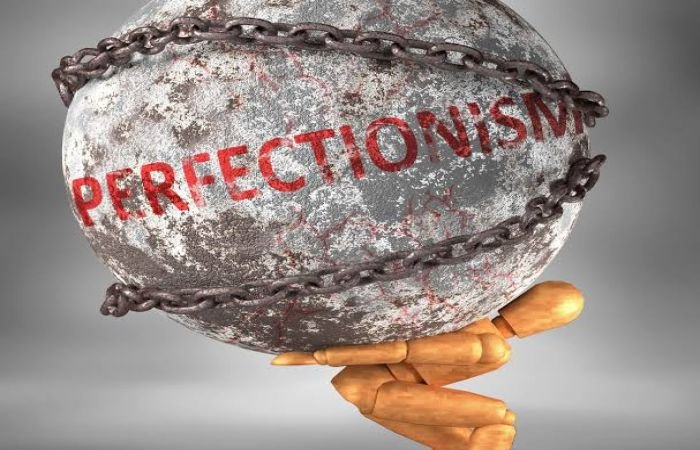
Perfectionism... A blessing or a curse ?

The 21st century's modern society seems to be more and more inclined to perfectionism and regards it as one of the pillars of success; however some scientists and psychologists claim it to be rather a self-destructive trait. The question would be how much dare we say that it is a blessing, and can we really ignore the possibility of it being the opposite, a curse ?
Many elderly men and women have been interviewed and asked about this subject matter, for which they were rather repulsive " only God can be perfect" said an 83 years old American lady. On another perspective, youths seem to be reverent towards it " I don't think i can accomplish much without having perfectionism as my driving essence." Proclaimed one of MIT university students.
Psychologists and therapists took a deeper inspection and delved into the origins of perfectionism which had led to it not being a one dimensional trait but rather labeled as a multidimensional personality trait. Gordon L. Flett and Paul L. Hewitt are two Canadian clinical psychologists and researchers who are considered the world’s leading experts on perfectionism, they devided it into 3 dimensions as following :
Self-Oriented Perfectionism, which shows high standards toward yourself “I must be perfect.”
Socially-Prescribed Perfectionism, described as feeling that others demand perfection from you, it's most strongly linked to stress, anxiety, and depression.
Other-Oriented Perfectionism, which involves expecting others to be perfect, it is manifesting strongly in relationships or leadership.
Clinical therapists are also stating that it should be seen more as a cognitive distortion, a coping mechanism and also a behavioral pattern that lead eventually to burn outs and severe depression.
That being established, even though researches and conclusions seem to banish perfectionism, other therapists had another perspective, which was "adaptive Perfectionism" also called “positive perfectionism" and they proclaim its characteristics should involve high but realistic standards, motivation for excellence, good organization and most importantly satisfaction from doing one’s best without reaching perfection. This version doesn’t damage mental health as they claim, and society must know the difference and start acting on it.
To sum up, the issue seems to be the defining of perfectionism rather than the use of it, high awareness and knowledge of these ideologies and their nuances became quite vital, to heal nowdays youths and ambitious individuals. To conclude, it's safe to say that we can make a difference by installing this perspective in our entourage and society, and then, we just have to act on it.
Comment

Massy Brahimi
Perfect
Lydia Krireche
It's a perfect blog and very interesting 🤍✨
Amine Sadgui
It's a perfect Blog sir you are the best teacher

Lamine Chemani
A clear and balanced take on perfectionism, showing that the real issue is how we understand and apply it. Awareness makes all the difference, respect teacher